
THANK YOU FOR SUBSCRIBING
× 
Construction Tech Review Weekly Brief
Be first to read the latest tech news, Industry Leader's Insights, and CIO interviews of medium and large enterprises exclusively from Construction Tech Review

Surbana Jurong Group
Eugene Seah, Senior Director, Special Projects Group, CEO’s Office
Smart Cities Demystified
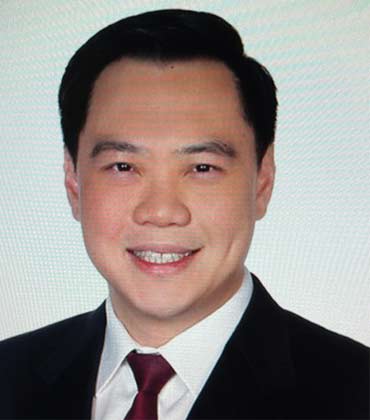
Eugene Seah
What are smart cities? Cities that are smart. That would be what my daughter will reply me. But what actually goes into smart cities and what do they actually mean.
Surbana Jurong (SJ) as a company, carry out designs and enablement of many smart cities in the world. As a service, we incorporate elements of good master planning, social economics planning, information and communications technology (ICT) and other digital and value enhancing approaches to make the city a smart city. There are several definitions of smart cities which entail a future proofed city, a future city, a resilient city, a sustainable city and even a digital city.
That is correct to an extent, but I would personally define smart cities as:
“A City that uses people centric data and big data to drive buildings and master planning designs with the use of digital and technological, incorporating the advancements of sustainability, resiliency, mobility and robotics that supports the live-work-play transformation within the city which results in a healthy economic value and a heighten experience of the quality of life by the city inhabitants.”
Good designed cities should not only have the balance use of digital, ICT and different technologies, but also, the balance approach of economic value and growth. Basically, the city is doing well with a balanced social economic ecology system that is self-sustaining and that provides a good quality of live for its inhabitants.
There are many examples of cities that have great technology advancements, but it will take a person an hour to travel a kilometer from point A to point B. There are also examples whereby cities are doing financially well, but the people staying in the cities are dissatisfied due to living conditions and the widening Gini Index1.
So what are the different constituents of smart cities . I have grouped up the different constituents and considerations into six main Headers and provided some discussion on each of the headers.
A New Live-Work-Play because of Digital.
Smart cities are meant to provide conducive environment for the population to live, work and play in the city.
The city is safe for its inhabitants and uses transformative technologies such as Artificial Intelligence (AI) and Internet of Things (IoT) technologies. Urban living will see the use of sustainable materials , less waste and a transformative approach to how people live, work and play in the literal sense.
The new Live-Work-Play will be definitely driven by Digital and all that is Associated with Digital. For instance, Xtended Reality will be used to cater for infotainment or edutainment which means 5G is not only a norm, but special contact lenses and wearables will be tuned into the data networks that push information or have information on demand which will shape the lives of the people in these smart cities.
Social Design
Smart Cities does not only mean the use of digital and technology, but a science in the approach of the design and planning of communities. The design of how cultural and the social fabric is woven into the design of precincts and communities shape the behaviors of the population. White spaces, social spaces, how blocks faces each other, inward look and outward looking block designs, are all part of the social designs on the city.
Sustainable and Resiliency Communities
Sustainability and Resiliency in designing buildings and cities are norms, but more so for smart cities. These cities by itself should be more productive in the use of resources and produces lesser waste than normal cities. In fact, sustainability cities are more resiliency to climate change, economic changes and other natural or man made challenges. Smart cities are also much more resilient. Resiliency by itself is a big topic but smart cities embrace technologies and designs to design out resiliency risk and cater to take the shock of, say, floods and food shortage due to disease or climate change.
Resiliency in Government and Industry Models
Smart Cities are also much more resiliency to changes in Government models. For instance, when ruling government parties changes, there could be potentially change on government planning rules, launch of projects or even the stalling of projects. Smart Cities would be resiliency to such Government change models because designers will be looking at future proofing their building, township or city design so that any changes in regulations or Governance would not affect these developments greatly. In addition, smart cities are also resilient and supportive in the economies that it drives, be it tourism, healthcare and aviation. Smart cities support the sectorial push and enhance its economies with its own support of its own ecology of businesses.
The articles from these contributors are based on their personal expertise and viewpoints, and do not necessarily reflect the opinions of their employers or affiliated organizations.
Top
